Preschool is a wonderful stage when children begin discovering the world through curiosity, imagination, movement, and play. At this age, learning does not have to happen only through books or worksheets. In fact, children often understand concepts better when they can touch, create, move, explore, and interact with others.
The right preschool activities can support a child’s cognitive, physical, social, emotional, and creative development while making learning enjoyable. Whether at school or at home, simple activities can encourage children to ask questions, solve problems, express themselves, and develop confidence.
12 Fun Learning Activities Every Preschooler Will Love
1. Storytelling and Picture Books
Storytelling is much more than entertainment. It helps preschoolers develop language, listening skills, imagination, and concentration.
Parents and teachers can use colourful picture books, puppets, or simple props to make stories interactive. Asking questions such as “What do you think happens next?” encourages children to think creatively and express their ideas.
Storytelling also introduces children to new words, characters, emotions, and situations in an enjoyable way.
2. Creative Art and Craft
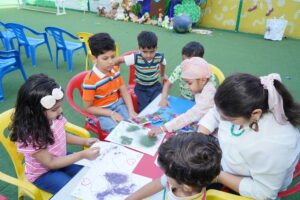
Give a child some paper, crayons, colours, clay, or safe craft materials, and you can open the door to endless creativity.
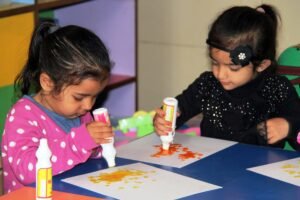
Art and craft activities allow preschoolers to experiment with colours, shapes, textures, and patterns. Drawing, finger painting, paper cutting, clay modelling, and collage-making can also improve hand-eye coordination and fine motor skills.
Instead of focusing on creating a perfect picture, parents should encourage children to explain what they have created. This gives them an opportunity to express their thoughts and imagination.
3. Building with Blocks
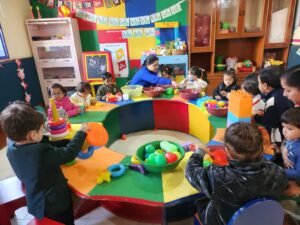
Building blocks are simple but powerful learning tools for young children. Preschoolers can use them to construct towers, houses, bridges, roads, and imaginative structures.
While playing, children learn about balance, size, shapes, space, and cause and effect. They also practise problem-solving when a structure falls and they have to figure out how to rebuild it.
Block play can become even more engaging when children work together, encouraging communication and cooperation.
4. Music, Singing and Movement
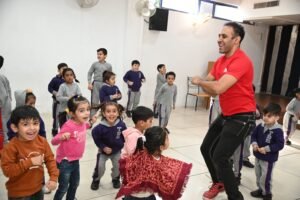
Music can make learning energetic and memorable. Singing rhymes, clapping to rhythms, dancing, and playing simple musical instruments can help children develop coordination, listening abilities, rhythm, and confidence.
Teachers can also use songs to introduce numbers, alphabets, colours, body parts, or everyday routines.
Movement-based activities are particularly useful because preschoolers naturally learn through physical exploration. They allow children to participate actively rather than simply listen.
5. Nature Exploration
Children are naturally curious about the world around them. A simple nature walk can therefore become an exciting learning experience.
Ask children to observe leaves, flowers, insects, clouds, birds, or different textures. They can collect fallen leaves, identify colours, compare sizes, or discuss what they see.
Nature exploration helps children develop observation skills and introduces basic concepts related to science and the environment. It can also encourage appreciation and care for the natural world.
6. Simple Science Experiments
Preschool science does not need complicated equipment. Simple, supervised experiments can introduce children to fascinating concepts.
For example, children can explore which objects float or sink, observe how colours mix, or watch what happens when ice melts.
The objective is not to teach complex scientific terminology. Instead, children should be encouraged to observe, predict, ask questions, and discuss what happened.
This kind of hands-on learning helps develop curiosity and early problem-solving abilities.
7. Sorting and Matching Games
Sorting activities can turn everyday objects into learning resources.
Children can sort objects according to colour, shape, size, texture, or type. They can match similar pictures, pair objects, or arrange items from smallest to largest.
These activities introduce early mathematical thinking and help children recognise patterns and differences.
Parents can use toys, buttons, building blocks, or household objects, provided the materials are age-appropriate and safe.
8. Pretend Play and Role-Playing
Pretend play allows children to create their own stories and explore different roles. They may pretend to be doctors, teachers, chefs, shopkeepers, firefighters, or parents.
This type of imaginative play helps children develop communication skills while allowing them to explore emotions and real-life situations.
Role-playing can also teach social concepts such as sharing, helping others, taking turns, and solving simple disagreements.
Most importantly, children get the freedom to use their imagination without worrying about whether there is a “right” answer.
9. Puzzles and Problem-Solving Games
Age-appropriate puzzles provide children with an enjoyable way to practise concentration and logical thinking.
Jigsaw puzzles, matching games, simple mazes, and shape puzzles encourage children to observe details and think about how different pieces fit together.
When children solve a puzzle independently, they also experience a sense of achievement. If they struggle, adults can provide hints rather than immediately solving the problem for them.
This encourages persistence and helps children understand that making mistakes is a natural part of learning.
10. Water and Sand Play
Water and sand play can provide both sensory experiences and learning opportunities.
Children can pour, scoop, measure, transfer, build, and experiment with different containers. They begin to understand concepts such as volume, quantity, texture, and movement through direct experience.
Sensory activities can also be calming and enjoyable. They encourage children to explore using their hands while developing fine motor coordination.
As with all activities involving water or small materials, appropriate adult supervision is important.
11. Outdoor Games
Running, jumping, balancing, throwing, catching, and obstacle courses are excellent ways for preschoolers to develop gross motor skills.
Outdoor games also give children opportunities to practise following instructions, taking turns, cooperating with others, and understanding simple rules.
Activities such as “follow the leader,” relay games, balancing challenges, and treasure hunts can combine physical movement with cognitive and social learning.
Regular physical play can make children more active while giving them a healthy way to explore their surroundings.
12. Mindfulness and Quiet-Time Activities
Preschoolers are active, but they can also benefit from learning simple ways to pause and relax.
Short breathing exercises, guided relaxation, quiet storytelling, colouring, or listening to soft sounds can introduce children to the idea of mindfulness.
These activities should be simple and age-appropriate. The goal is not to expect young children to sit still for long periods, but to help them gradually recognise their feelings and become comfortable with short periods of calm.
Why Are These Activities Important for Preschoolers?
The most effective early learning experiences often combine education with enjoyment. These activities can support several areas of development simultaneously.
Cognitive development: Puzzles, sorting games, experiments, and building activities encourage observation, reasoning, memory, and problem-solving.
Physical development: Outdoor games, dancing, art, and sensory activities help strengthen coordination and motor skills.
Language development: Storytelling, role-play, music, and group conversations encourage children to listen, communicate, and learn new vocabulary.
Social development: Group games and collaborative activities help children practise sharing, cooperation, turn-taking, and communication.
Emotional development: Creative expression, pretend play, and mindfulness can help children explore emotions and build confidence.
The key is to provide variety. Every child learns differently, so offering different types of activities gives children opportunities to discover their interests and strengths.
How Parents Can Make Learning More Engaging at Home
Parents do not need expensive toys or elaborate setups to support preschool learning. Everyday moments can become learning opportunities.
Cooking together can introduce counting and measurement. A walk can become a nature lesson. Sorting laundry can teach colours and categories. Reading a bedtime story can develop language and imagination.
Most importantly, allow children to participate actively. Ask questions, encourage them to make choices, and give them enough time to explore.
Try not to focus solely on the final result. For young children, the process of experimenting, asking questions, making mistakes, and trying again is often where the most valuable learning happens.
Why Tinkerbelle Is Perfect for Little Learners?
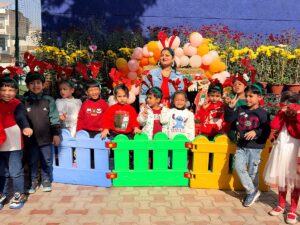
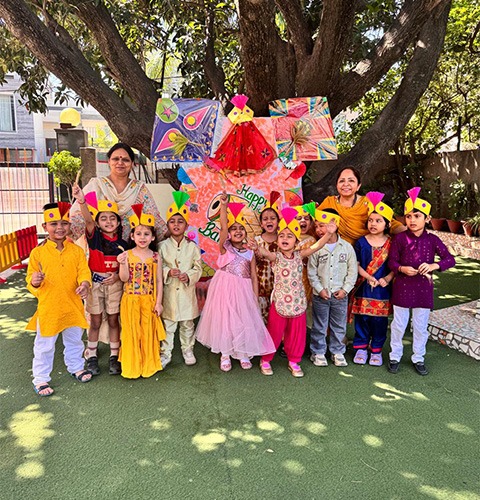
At Tinkerbelle Kindergarten & Play School, learning is designed around curiosity, creativity, exploration, and active participation. The school follows a play-based and activity-driven approach where children experience a balance of teacher-led sessions, independent activities, and child-initiated exploration.
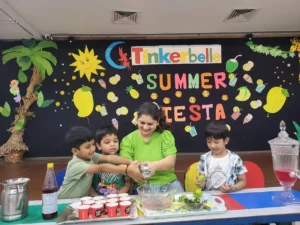
From creative workshops and group interaction to field trips, mindfulness, storytelling, music, dance, and experiential classroom activities, children get opportunities to learn beyond traditional worksheets. Interactive smart boards, learning centres, books, props, toys, and engaging classroom environments further encourage children to explore concepts through hands-on experiences.
With programs ranging from Playway and Nursery to LKG and UKG, Tinkerbelle aims to create a supportive environment where children can develop academically, socially, emotionally, physically, and creatively.
Conclusion
Preschool is not simply about preparing children for the next class. It is about helping them become curious learners who are confident enough to explore, ask questions, make mistakes, and try again.
Activities such as storytelling, art, building, music, nature exploration, puzzles, pretend play, sensory activities, outdoor games, and mindfulness can turn everyday experiences into meaningful learning opportunities.
When children are encouraged to play, learn, and grow, education becomes something they actively experience rather than something they simply receive. With the right environment and guidance, these early experiences can help build skills and positive attitudes toward learning that stay with children as they progress through their educational journey.