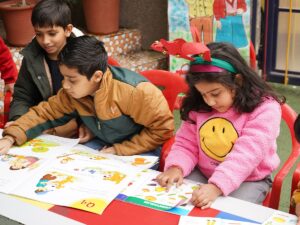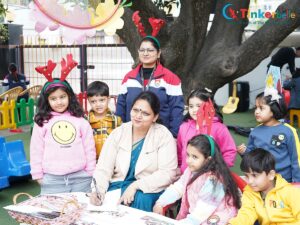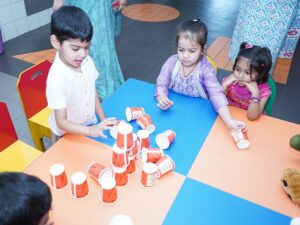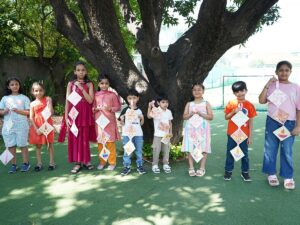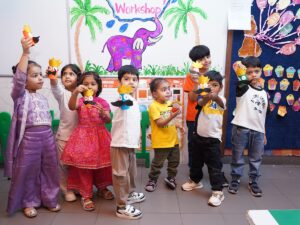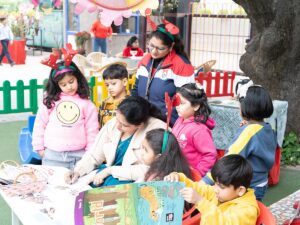

In today’s rapidly changing world, education is no longer just about memorizing facts or completing worksheets. The future belongs to curious, confident, and creative thinkers — and that’s exactly what play-based learning helps nurture. At Tinkerbell School, Panchkula, we believe that play isn’t just recreation; it’s a powerful form of learning that shapes a child’s intellectual, social, and emotional development.
From building blocks to storytelling, from role play to outdoor adventures, play-based learning provides children with the tools to understand the world around them while developing essential 21st-century skills. Let’s explore why this approach is becoming the cornerstone of modern education and how Tinkerbell School integrates it into every classroom experience.
1. Understanding Play-Based Learning
Play-based learning is an educational approach that uses play as the primary method for teaching and discovery. It encourages children to explore, experiment, create, and interact in a structured yet flexible environment. Unlike traditional learning, where lessons are led by teachers and focused on outcomes, play-based learning puts the child at the center of the process.
At Tinkerbell School, Panchkula, this means:
- Children learn by doing and experiencing.
- Lessons are designed around curiosity and imagination.
- Teachers act as facilitators rather than instructors.
- Learning happens naturally through hands-on exploration.
This approach aligns with modern educational theories such as Montessori, Reggio Emilia, and experiential learning — all of which emphasize that meaningful learning happens when children are actively engaged and emotionally invested.
2. The Science Behind Play-Based Learning
Numerous studies in child psychology and education have shown that play is essential for healthy brain development. During play, children form neural connections that strengthen their ability to solve problems, communicate, and self-regulate emotions.
Here’s how it benefits a child’s growth:
- Cognitive Development: Play stimulates the prefrontal cortex, enhancing memory, attention, and problem-solving skills.
- Language Skills: Through conversations during play, children build vocabulary, storytelling ability, and comprehension.
- Social-Emotional Growth: Cooperative play teaches empathy, sharing, negotiation, and conflict resolution.
- Physical Coordination: Active play strengthens fine and gross motor skills.
At Tinkerbell School, every play activity — whether it’s building a sandcastle or creating an art project — is carefully curated to boost these developmental milestones.
3. The Shift from Traditional to Experiential Learning
Traditional education models often prioritize rote learning, where children memorize information without truly understanding it. This approach limits creativity and curiosity.
In contrast, play-based learning focuses on experiential education — learning through doing. When children manipulate objects, role-play scenarios, or explore nature, they connect concepts with real-life experiences.
For example:
- Counting blocks teaches math concepts like addition and subtraction.
- Storytelling sessions improve imagination and narrative skills.
- Building with LEGO enhances spatial reasoning and engineering skills.
At Tinkerbell School, Panchkula, teachers design every classroom environment to invite discovery and curiosity. This ensures that learning is joyful, purposeful, and lasting.
4. Benefits of Play-Based Learning
a. Fosters Creativity and Imagination
When children are free to create, invent, and explore, they learn to think outside the box. A child building a rocket out of cardboard isn’t just playing — they’re engaging in design thinking, problem-solving, and creative expression.
b. Encourages Social Skills
Play-based learning is inherently social. It teaches cooperation, sharing, and communication. Children learn to negotiate rules, express feelings, and respect others’ ideas — vital traits for emotional intelligence.
c. Strengthens Academic Foundations
Play-based environments naturally integrate academic concepts. Counting toys, identifying colors, and exploring nature all help children grasp literacy, numeracy, and science in an enjoyable way.
d. Builds Confidence and Independence
When children make their own decisions during play, they develop self-confidence and critical thinking. They learn from trial and error — an essential part of lifelong learning.
e. Supports Emotional Regulation
Through play, children express emotions in a safe space. They learn how to cope with frustration, disappointment, and excitement — skills crucial for emotional maturity.
f. Promotes Physical Health
Active play boosts motor skills, coordination, and overall physical fitness, counteracting the sedentary habits common in today’s digital age.
5. Play-Based Learning at Tinkerbell School, Panchkula
At Tinkerbell School, play is the foundation of our educational philosophy. Every classroom, play area, and learning activity is designed to stimulate curiosity and engagement.
Here’s how we make play-based learning come alive:
a. Thematic Learning
Each month, our curriculum revolves around a central theme — such as “Seasons,” “Animals,” or “Community Helpers.” Children explore these topics through stories, art, music, and dramatic play, making learning holistic and interconnected.
b. Interactive Learning Centers
Our classrooms feature dedicated zones — like a reading corner, art studio, and science station — where children can freely move and choose activities that interest them. This autonomy nurtures responsibility and independence.
c. Outdoor Exploration
We believe that nature is the best classroom. Outdoor play sessions at Tinkerbell School encourage children to explore plants, insects, and natural materials. These experiences help them understand environmental concepts while developing sensory and motor skills.
d. Role Play and Pretend Play
Through dress-up games and imaginative storytelling, children step into various roles — from doctors to astronauts. This boosts creativity, empathy, and problem-solving.
e. Art and Music Integration
Music, dance, and art are integral to our daily routine. These creative outlets help children express emotions, build rhythm and coordination, and appreciate cultural diversity.
f. Teacher-Guided Discovery
Our educators act as mentors — observing, guiding, and extending play to introduce new concepts organically. For example, if children are building a tower, a teacher might ask, “How can we make it taller without it falling?” — encouraging engineering thinking.
6. How Play Builds 21st-Century Skills
The future demands more than academic excellence. Children need adaptability, innovation, and collaboration to succeed in a fast-paced, tech-driven world. Play-based learning is the perfect foundation for these essential life skills.
a. Critical Thinking
Problem-solving during play — like figuring out how to balance blocks — strengthens logical reasoning and decision-making.
b. Collaboration
Team-based games teach teamwork, communication, and respect for diverse opinions.
c. Creativity
Unstructured play sparks imagination, encouraging children to find multiple solutions to challenges.
d. Communication
Children develop verbal and non-verbal communication skills as they interact, negotiate, and tell stories.
e. Emotional Intelligence
Play helps children identify and manage emotions — crucial for building healthy relationships later in life.
f. Adaptability
When play scenarios change, children learn flexibility — a vital trait for navigating future academic and professional environments.
7. Technology and Play-Based Learning
In a digital world, integrating technology with play is key to keeping education relevant. At Tinkerbell School, Panchkula, we carefully balance digital learning with hands-on experiences.
Interactive smart boards, educational apps, and digital storytelling are used to complement — not replace — physical play. This hybrid model ensures children are technologically literate while staying rooted in creative exploration.
8. Parental Involvement in Play-Based Learning
At Tinkerbell School, we believe parents are partners in a child’s learning journey. We encourage parents to:
- Engage in storytelling, puzzles, and role play at home.
- Limit passive screen time and promote imaginative play.
- Observe and celebrate their child’s curiosity and growth.
- Participate in school activities and workshops that support playful learning.
When parents and teachers work together, play becomes a bridge between school and home — creating a consistent, joyful learning experience.
9. Global Recognition of Play-Based Learning
Play-based learning isn’t just a trend — it’s a global movement. Leading education systems worldwide, including those in Finland, New Zealand, and Canada, have long recognized play as an essential part of early education.
Organizations like UNICEF and UNESCO advocate for play-based education as a right for every child, citing its proven benefits for cognitive and emotional development.
By embracing this approach, Tinkerbell School, Panchkula, joins a global community committed to reimagining education for the next generation.
10. Real-Life Examples from Tinkerbell Classrooms
To understand how effective play-based learning is, let’s look at some everyday examples from our classrooms:
- Math through Play: Children count fruits during pretend grocery shopping, understanding numbers and basic arithmetic.
- Science through Exploration: They mix colors in water to learn about chemical reactions.
- Language through Stories: They create and narrate their own fairy tales, building vocabulary and confidence.
- Social Learning through Team Games: They learn turn-taking, fairness, and patience during group play.
Each playful moment becomes a meaningful lesson — making learning joyful and deeply impactful.
11. The Future of Education Lies in Play
As the world evolves, so must education. The jobs and challenges of tomorrow will demand thinkers, creators, and collaborators — not just memorization experts. Play-based learning equips children with these adaptive skills from the very beginning.
At Tinkerbell School, Panchkula, we’re proud to be pioneers in nurturing this new generation of learners who will grow up to be problem solvers, innovators, and compassionate individuals.
12. Why Choose Tinkerbell School, Panchkula?
When parents choose Tinkerbell School, they’re choosing more than just an academic institution — they’re joining a nurturing community that celebrates childhood.
Here’s what makes us special:
- Child-Centered Curriculum: Every activity is designed around how children learn best — through exploration and play.
- Safe and Stimulating Environment: Spacious classrooms, colorful play areas, and nature-inspired learning spaces.
- Experienced Educators: Our teachers are trained to facilitate discovery-based learning and provide personalized attention.
- Balanced Development: Equal focus on academics, creativity, and emotional intelligence.
- Holistic Growth: Programs that enhance physical, cognitive, social, and emotional development.
By combining modern educational principles with the timeless joy of play, Tinkerbell School ensures every child builds a strong foundation for lifelong learning.
13. Tips for Encouraging Play-Based Learning at Home
Parents can extend the benefits of play-based learning beyond school hours. Here are a few simple ways:
- Create a Play Zone: Dedicate a space where your child can explore toys, art, or building blocks freely.
- Join in the Fun: Participate in pretend play — become a chef, a doctor, or a superhero alongside your child.
- Ask Open-Ended Questions: Instead of giving answers, ask questions like “What do you think will happen if…?”
- Value the Process, Not the Product: Focus on creativity and effort rather than perfection.
- Encourage Outdoor Play: Nature walks, gardening, and ball games build curiosity and physical health.
These small steps make a big difference in supporting your child’s development and creativity.
14. Conclusion: Shaping Tomorrow’s Thinkers through Play
Play is not a distraction from learning — it is learning. Through play, children develop the skills, confidence, and curiosity that will guide them for life.
At Tinkerbell School, Panchkula, we are dedicated to nurturing every child’s potential through a balanced, play-based curriculum that blends imagination with education. As the world continues to evolve, one thing remains constant — children learn best when they’re happy, curious, and free to explore.
Play is how the next generation will invent, discover, and thrive. And at Tinkerbell School, we’re proud to lead that journey — one joyful play session at a time.