A child’s early learning environment shapes their confidence, habits, values, personality, and hunger to explore the world. These early years—often called the foundation years – are where emotional security, intellectual curiosity, and social awareness begin to grow. And at the heart of this growth lies a simple yet powerful truth: young learners thrive best in a safe, nurturing, and emotionally supportive school environment.
At Tinkerbelle—widely known as the Best Kindergarten in Panchkula – creating such an environment is not an additional feature; it is the school’s philosophy. Every classroom, activity, teaching method, and interaction is designed to make children feel secure, valued, and inspired to learn joyfully.
In this comprehensive blog, we will explore why a safe and nurturing school environment matters so deeply for young learners, how it influences every aspect of their development, and how Tinkerbelle Panchkula sets the benchmark for quality early childhood education.
1. The Early Years: Why the Environment Matters Most
Children between 2 to 6 years are incredibly sensitive and impressionable. Their brains grow faster during these years than at any other stage in life. They absorb behaviours, emotions, words, and experiences like a sponge. This is why the environment of a school is not just a backdrop; it is an active force shaping a child’s mindset and personality.
A safe and nurturing school environment helps in:
- Building emotional security
- Enhancing self-confidence
- Encouraging exploration
- Supporting brain development
- Promoting social adaptability
- Creating a positive association with learning
When children feel comfortable and protected, they naturally engage more, ask questions freely, and are motivated to learn new things daily. This forms the foundation for future academic success.
2. Emotional Safety: The First Layer of Learning
Children learn best when they feel emotionally secure. Emotional safety includes:
- Having teachers who listen patiently
- Knowing mistakes are acceptable
- Feeling loved, valued, and understood
- Being able to express feelings without fear
At Tinkerbelle, the teachers are trained to practice emotional sensitivity and child-centric communication. This means every child gets individual attention, gentle guidance, and positive reinforcement.
When children experience this kind of emotional nurturing:
- They openly communicate their needs
- They develop self-control and emotional intelligence
- Their anxiety levels drop
- They become more confident and expressive
This is one of the major reasons why parents call Tinkerbelle the Best Kindergarten in Panchkula—because here, emotional development is treated with the same importance as academics.
3. Physical Safety: A Must-Have Foundation for Trust
Parents need peace of mind when they leave their little ones at school. A physically safe environment makes children feel secure and reduces parental anxiety.
Tinkerbelle ensures physical safety through:
- CCTV-monitored campus
- Child-safe furniture (rounded corners, non-toxic materials)
- Soft flooring for play areas
- Age-appropriate toys and equipment
- Strict visitor entry protocols
- Regular hygiene and sanitation
- Safe outdoor play zones
- Well-trained support staff
A safe physical environment ensures children move freely without the risk of injury. This freedom is essential for developing independence, motor skills, and confidence in their physical abilities.
4. A Nurturing Atmosphere Boosts Cognitive Development
A nurturing environment is rich in:
- Stimulating learning materials
- Open-ended activities
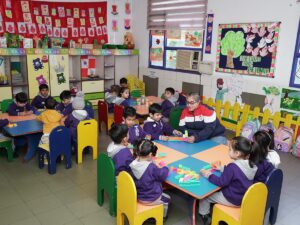
- Colours, patterns, and child-friendly classrooms
- Storytelling corners
- Interactive displays
- Montessori-inspired workstations
These elements have a profound impact on cognitive development.
When children are placed in an environment where learning feels natural, enjoyable, and curiosity-driven:
- Their memory improves
- Their reasoning and problem-solving skills sharpen
- They learn through discovery, not pressure
- They internalize concepts more effectively
Tinkerbelle Panchkula uses a blend of Montessori tools, experiential learning, sensory activities, and structured play to make children excited about learning every day.
This well-balanced approach is why Tinkerbelle is considered the Best Kindergarten in Panchkula by so many parents.
5. Social Development: Learning to Work, Play, and Grow Together
A nurturing school environment also builds social skills, which are essential for future success.
At Tinkerbelle, children learn:
- Sharing and teamwork
- Respecting differences
- Taking turns
- Expressing thoughts politely
- Solving small conflicts
- Building friendships
- Understanding empathy
These skills are best learned in a safe, structured, yet joyful school setting.
Teachers create group activities, team games, and collaborative play sessions that allow children to understand the value of working and learning together.
This social bonding strengthens emotional intelligence, preparing them not only for school but for life.
6. Building Confidence and Independence
A nurturing environment empowers children to believe in themselves. Tinkerbelle follows a child-led exploration model, where children are encouraged to:
- Try new activities
- Make small decisions
- Take responsibility for their belongings
- Participate in class discussions
- Solve problems on their own
Every small achievement—zipping their bag, completing a puzzle, or speaking in a group—boosts a child’s confidence.
When this happens consistently, children develop:
- A positive self-image
- Independence
- Leadership qualities
- Resilience
- Curiosity
Such attributes are nurtured only in a positive environment where every child is appreciated and encouraged.
7. Importance of a Positive Teacher-Child Relationship
Teachers are the heart of a kindergarten. Their attitude, warmth, communication style, and empathy play a major role in shaping the school environment.
Teachers at Tinkerbelle Panchkula:
- Maintain gentle, respectful communication
- Observe children closely for individual needs
- Use positive discipline
- Encourage expression
- Celebrate small achievements
For a young learner, a loving teacher becomes:
- A guide
- A mentor
- A role model
- A source of comfort
This trust forms a strong base for better learning outcomes.
8. Structured Routines Provide Stability
Young children thrive when their day has a predictable structure. Routines help them feel secure and reduce anxiety.
At Tinkerbelle, the daily routine includes:
- Morning circle time
- Learning modules
- Activity-based sessions
- Music and dance
- Outdoor play
- Snack time
- Storytelling
- Nap/rest time (if needed for age group)
This consistent schedule helps children understand time, develop discipline, and build healthy habits.
9. Play-Based Learning: The Heart of Kindergarten Education
Play is not just fun—it is a scientifically proven method for rapid learning in early childhood.
A nurturing school environment integrates learning into:
- Sensory play
- Pretend play
- Outdoor games
- Music and movement
- Art and craft
- Building blocks and puzzles
- Dramatic role play
- Nature exploration
Tinkerbelle uses play as a medium to teach everything—from language and math concepts to social behaviour and emotional awareness.
Parents appreciate this learning style, which is why Tinkerbelle is often reviewed as the Best Kindergarten in Panchkula.
10. Holistic Development: Beyond Academics
A truly nurturing school environment focuses on overall development, not rote learning.
Tinkerbelle’s curriculum includes:
- Language skills
- Numeracy foundations
- Motor skills
- Art and craft
- Music and movement
- Science experiments
- Value education
- Life skills
- Health and hygiene routines
By focusing on multiple growth areas, children receive a balanced, complete early childhood education.
11. A Child’s Safety Also Includes Mental Wellbeing
Modern kindergartens must also support mental wellness. A child-friendly environment helps:
- Reduce stress
- Build confidence
- Increase attention span
- Promote positive behaviour
Tinkerbelle includes:
- Mindfulness activities
- Breathing exercises
- Relaxation techniques
- Emotional expression sessions
These help children understand their feelings better and respond calmly to situations.
12. Parent-School Partnership Strengthens Security
A nurturing environment is complete when parents and teachers work as a team.
Tinkerbelle values parent involvement through:
- Regular parent-teacher meetings
- Daily updates
- Open communication channels
- Workshops for parents
- Transparent feedback sessions
This partnership ensures that the child receives consistent support both at home and school.
13. Encouraging Creativity and Imagination
Children need the freedom to imagine, create, build, and express. This fuels brain development and confidence.
Tinkerbelle provides:
- Art studios
- Open-ended materials
- Dramatic play corners
- Music instruments
- Creative writing and storytelling sessions
- DIY activities
This encourages children to think freely, express their imagination, and discover their interests.
14. Environment That Encourages Curiosity
In a nurturing setting, every day is an opportunity to explore something new. Tinkerbelle creates curiosity-driven spaces where children are encouraged to:
- Ask questions
- Experiment
- Explore nature
- Engage in hands-on activities
- Observe cause and effect
Curiosity builds intelligence and forms the base of future academic excellence.
15. Safe Outdoor Play Strengthens Growth
Outdoor play is essential for physical and mental development. Tinkerbelle’s safe, supervised outdoor environment includes:
- Play structures
- Sand play
- Water play
- Running tracks
- Balancing games
- Nature walks
These activities build:
- Strength
- Flexibility
- Stamina
- Coordination
- Confidence
Outdoor play also encourages teamwork and social bonding.
16. The Role of Safety in Building Discipline
Children learn discipline naturally when they are in a safe and predictable environment. Tinkerbelle promotes:
- Respect for rules
- Classroom responsibility
- Sharing and caring
- Good behaviour
- Time management
When children feel safe, they are more open to following instructions and participating constructively.
17. Preparing Children for Future Schooling
A safe and nurturing environment lays the foundation for success in higher classes. Children who begin their education at Tinkerbelle gain:
- Strong academic readiness
- Confidence to participate
- Healthy social behaviour
- Independent learning habits
- Emotional strength
- Creativity and logical thinking
This makes the transition to formal schooling smooth and stress-free.
Why Tinkerbelle is Truly the Best Kindergarten in Panchkula
There are many reasons why parents trust and recommend Tinkerbelle for early education:
- A warm, homelike environment
- Experienced and caring teachers
- Child-safe infrastructure
- Montessori and activity-based learning
- Strong focus on emotional and social development
- Safe outdoor play zones
- Individualized attention
- Strong parent-school partnership
- Modern teaching resources
- Value-based education
- Balanced academics and play
- Proven track record
Children at Tinkerbelle grow into confident, curious, expressive, and emotionally secure individuals—all because they grow in an environment designed with love and care.
Conclusion
A safe and nurturing environment is not just beneficial—it is essential for young learners. It gives children the courage to explore, learn, express, and grow confidently. It shapes their personalities and lays the foundation for lifelong success.
Tinkerbelle Panchkula understands this deeply. With its child-first approach, warm atmosphere, experienced staff, and holistic curriculum, it truly sets the standard for early childhood education. This is why parents proudly call it the Best Kindergarten in Panchkula.
Tinkerbelle is not just a school—it is a place where children feel at home, where learning is joyful, and where every child’s growth is celebrated.