Early childhood is the foundation on which a child’s entire academic, emotional, and social journey is built. At this age, children learn best when they explore, discover, and engage with their environment freely. This is where play-based learning becomes a powerful approach—an approach that Tinkerbelle, a leading Playway School in Panchkula, has integrated into every aspect of its early education system.
At Tinkerbelle, play is not simply a break from learning; play is learning. Every activity is thoughtfully designed to nurture curiosity, build confidence, encourage communication, and strengthen essential social skills. As one of the Best Montessori School in Panchkula, Tinkerbelle blends Montessori principles with play-based learning, creating a perfect environment for children to grow holistically.
In this detailed blog, we explore how Tinkerbelle uses play-based learning to help children develop confidence, collaboration, communication, problem-solving abilities, and strong social foundations that will support them for life.
1. Understanding Play-Based Learning: The Heart of Tinkerbelle’s Philosophy
Play-based learning means giving children opportunities to explore, imagine, and create while educators guide them gently in the background. It encourages children to learn through real-life experiences rather than memorization.
At Tinkerbelle, play-based learning includes:
- Free play – Children choose materials and activities independently.
- Structured play – Teachers create purposeful play situations with specific learning goals.
- Group play – Children interact, share, collaborate, and solve tasks together.
- Pretend play – They imagine roles and situations, developing creativity and emotional expression.
- Outdoor play – They explore nature, develop motor skills, and build resilience.
These experiences support the core developmental areas needed during preschool and kindergarten. This is why many parents searching for a Play School near me or Kindergarten Schools near me choose Tinkerbelle for their child’s early education.
2. How Play-Based Learning Builds Confidence in Young Children
Confidence is not something children are born with; it is something they develop through meaningful experiences. Tinkerbelle focuses on every child’s unique pace and personality, creating a positive environment where they can try new things without fear.
Here’s how Tinkerbelle’s play-based approach strengthens children’s self-confidence:
2.1 Freedom to Explore and Experiment
Children gain confidence when they are free to make choices, test ideas, and learn from outcomes. Whether it is stacking blocks, solving puzzles, building structures, or engaging in water and sand play, every experience teaches them problem-solving and independence.
When children see that their ideas matter and their actions lead to results, their self-belief grows naturally.
2.2 Celebrating Small Achievements
At Tinkerbelle, every milestone—small or big—is acknowledged and encouraged. This consistent appreciation helps children understand the value of effort and boosts their willingness to participate and excel.
2.3 Learning Without Pressure
Traditional learning methods often create stress, but Tinkerbelle’s play-based approach makes learning fun and pressure-free. When children are relaxed, they are more confident in sharing thoughts, taking initiative, and participating willingly.
This is one reason why Tinkerbelle is recognized as the Best Kindergarten in Panchkula, where confidence-building is embedded in everyday learning.
2.4 Encouraging Risk-Taking and Decision-Making
Through activities like balancing, climbing, role play, craft projects, and problem-solving tasks, children learn to take risks in a safe environment. This teaches them courage, resilience, and critical thinking.
3. Play-Based Learning and Its Impact on Social Skills
Social skills form the base of successful friendships, teamwork, communication, and emotional intelligence. Tinkerbelle understands that children learn to interact effectively not through textbooks but through hands-on experiences.
Here’s how play helps children develop essential social abilities:
3.1 Learning to Share and Cooperate
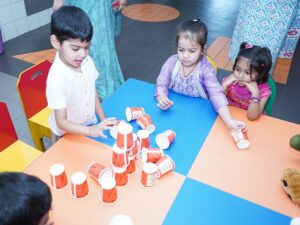
Whether children are building a tower together or sharing art materials, they learn about cooperation, mutual respect, and teamwork. Educators gently guide them to take turns, communicate needs, and respect others’ viewpoints.
3.2 Developing Communication Skills
Play encourages children to express ideas, ask questions, narrate stories, and listen to others. Pretend play, storytelling, and group games significantly boost vocabulary, speech clarity, and conversational skills.
3.3 Emotional Expression and Self-Regulation
When children engage in role-play or imaginative scenarios, they express emotions freely. Educators help them identify, manage, and understand feelings like joy, anger, frustration, or excitement.
This emotional awareness leads to healthier social interactions and stronger relationships.
3.4 Building Friendships
Play helps children bond with classmates naturally. Whether they collaborate on a project or enjoy outdoor time together, they form friendships that strengthen their sense of belonging.
As one of the Best Montessori School in Panchkula, Tinkerbelle ensures children develop social confidence through guided interactions and group activities.
4. The Montessori–Playway Blend at Tinkerbelle: A Powerful Combination
Tinkerbelle adopts the best of two worlds: the Montessori method and the playway approach.
4.1 Montessori Principles Applied Through Play
- Independence through child-led activities
- Hands-on learning using age-appropriate materials
- Freedom within structured boundaries
- Focus on fine motor and sensory development
4.2 Playway System for Holistic Growth
- Real-life learning through storytelling, music, movement, and games
- Creative expression through art, craft, and imaginative play
- Physical development through sports and outdoor activities
This blended method makes Tinkerbelle an ideal choice for parents searching for the Best Montessori School in Panchkula or Best Kindergarten in Panchkula.
5. Real-Life Examples of Social and Emotional Growth Through Play
Tinkerbelle’s classrooms often reflect these heartwarming real-life incidents:
5.1 The Shy Child Who Blossomed Through Pretend Play
A quiet child often feels overwhelmed in traditional settings. At Tinkerbelle, pretend play—like running a “toy shop,” “kitchen corner,” or “doctor set”—helps shy children express themselves comfortably.
As they take roles, interact with peers, and participate in group activities, they gradually open up and build confidence.
5.2 The Active Child Who Learns Patience
Some children are energetic and impatient. Through group games, turn-taking activities, and structured play, they learn patience, control, and cooperation.
5.3 The Creative Child Who Learns to Collaborate
Art and craft sessions are perfect for creative thinkers. While working with peers on group art projects or theme-based activities, children learn to merge ideas, respect differences, and work as a team.
Each day at Tinkerbelle reinforces how powerful play can be in shaping children’s personalities and social interactions.
6. How Tinkerbelle’s Environment Supports Confidence and Social Growth
6.1 Safe and Stimulating Classrooms
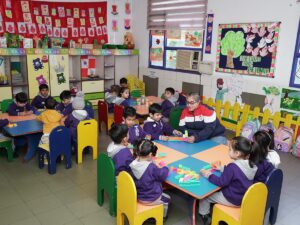
Tinkerbelle’s classrooms are designed to encourage exploration. Colorful reading corners, puzzle stations, building areas, art sections, and pretend-play zones help children engage independently.
6.2 Experienced and Caring Educators
Teachers at Tinkerbelle play the role of facilitators. They observe children closely, guide them gently, and create customized play activities based on individual needs.
6.3 Small Student-Teacher Ratio
With fewer children in each class, educators can give personal attention to every child’s social, emotional, and academic development.
6.4 Outdoor and Physical Play
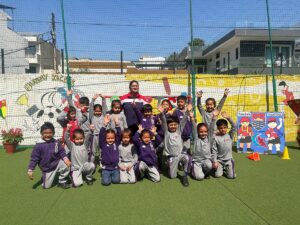
Outdoor time helps children release energy, socialize, and learn teamwork. Activities include free play, sports, obstacle courses, and nature exploration.
6.5 Sensory and Motor Development Corners
These dedicated areas help children improve balance, coordination, fine motor skills, and sensory processing—all essential for independent and confident functioning.
7. Academic Learning Through Play: A Strong Foundation for the Future
While the focus is on confidence and social skills, play-based learning at Tinkerbelle also prepares children academically. Many parents searching for Kindergarten Schools near me worry that play-based methods may not teach academics effectively. In reality, the opposite is true—play builds stronger understanding and better retention.
Here is how academics naturally blend with play:
7.1 Early Literacy Through Stories and Songs
Children learn sounds, letters, words, and comprehension skills through:
- Storytelling
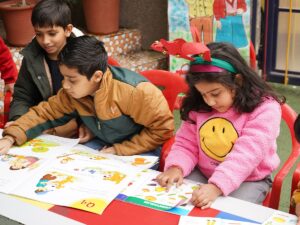
- Picture reading
- Alphabet games
- Flashcards
- Rhymes and songs
These activities build strong literacy foundations.
7.2 Numeracy Through Hands-On Learning
Children explore numbers through:
- Counting beads
- Building blocks
- Pattern activities
- Sorting and matching games
- Pretend shops
This makes math enjoyable and easy to understand.
7.3 Science Through Exploration
Activities like mixing colors, planting seeds, water play, and nature observation help children understand scientific concepts intuitively.
7.4 Art and Craft for Creativity
Painting, clay modeling, paper folding, and hand printing build imagination, concentration, and motor skills.
7.5 Music and Movement for Expression
Dance, rhythmic activities, and musical games improve coordination, listening skills, and confidence.
8. How Parents Benefit from Tinkerbelle’s Play-Based Approach
Parents often share that after enrolling their children at Tinkerbelle:
- Their child becomes more confident.
- Their vocabulary and communication improve.
- They make friends more easily.
- Their creativity blossoms.
- Their enthusiasm for learning increases.
- Their emotional balance improves.
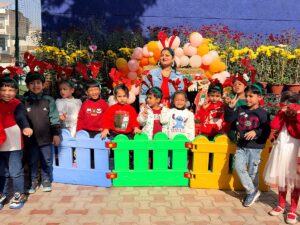
A strong home–school connection further supports social and emotional development. Tinkerbelle regularly engages parents through events, celebrations, workshops, and open communication.
9. Tinkerbelle’s Play-Based Programs: A Closer Look
9.1 Playgroup
Perfect for toddlers beginning their school journey. Focus on sensory play, movement, music, interaction, and routine building.
9.2 Nursery
Builds early numeracy, literacy, creativity, and social interaction through guided play.
9.3 LKG & UKG (Kindergarten)
Structured play combined with foundational academics prepares children for primary school with confidence and curiosity.
Each program aligns with what parents searching for the Best Kindergarten in Panchkula expect from a high-quality early education institution.
10. Why Tinkerbelle Is the Preferred Choice for Parents in Panchkula
Tinkerbelle stands out because it offers:
- A child-first approach
- Montessori + Playway blended learning
- Safe and joyful campus
- Age-appropriate teaching materials
- Experienced and loving educators
- Strong academic foundation
- Consistent emotional, social, and confidence development
- A warm and inclusive community
When parents search for a Playway School in Panchkula or Play School near me, Tinkerbelle confidently stands as one of the best early learning schools.
Conclusion: Play Builds More Than Skills—It Builds Happy, Confident Futures
Play-based learning is not just a method; it is a philosophy that shapes children into confident, expressive, curious, and socially aware individuals. At Tinkerbelle, children learn through joyful experiences that enrich their social interactions, boost confidence, stimulate creativity, and prepare them for academic success.
As one of the Best Montessori School in Panchkula and a preferred choice among parents looking for Kindergarten Schools near me, Tinkerbelle continues to provide an environment where every child feels valued, supported, and inspired to grow.
If you want your child to develop essential life skills in a nurturing, playful, and holistic learning environment, Tinkerbelle is the perfect beginning.