Why Tinkerbelle Is Recognized as the Best Montessori School in Panchkula
Early childhood is a powerful phase where children absorb knowledge, shape their personalities, and build the foundation for lifelong learning. Parents today are looking for schools that move beyond rote methods and focus on holistic growth. This is where Montessori learning stands out—and it is exactly what makes Tinkerbelle widely regarded as the Best Montessori School in Panchkula.
Montessori philosophy, founded by Dr. Maria Montessori, focuses on nurturing a child’s natural curiosity, independence, creativity, and love for learning. Tinkerbelle brings these principles to life in a warm, safe, and scientifically designed environment where children learn joyfully and meaningfully.
This blog explores how Tinkerbelle integrates Montessori-inspired learning and why parents trust it as the most progressive early-learning school in Panchkula.
1. Understanding Montessori-Inspired Learning
Before diving into how Tinkerbelle implements the Montessori method, it’s important to understand the core philosophy.
Montessori education is built on these pillars:
- Child-led learning instead of teacher-directed
- Hands-on activities and experiential exploration
- A structured yet flexible classroom designed for independence
- Mixed-age groups based on natural learning stages
- Respect for each child’s pace, abilities, and individuality
The Montessori method focuses on the development of the whole child—intellectual, physical, emotional, social, and creative.
At Tinkerbelle, these principles are not just followed—they are thoughtfully adapted for modern early education needs, making it the Best Montessori School in Panchkula for 21st-century learners.
2. How Tinkerbelle Brings Montessori Principles to Life
2.1 A Prepared Environment That Encourages Exploration
In Montessori philosophy, the environment is considered a “third teacher.”
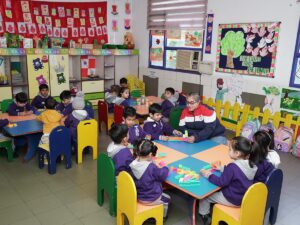
At Tinkerbelle, every space is designed with purpose:
- Classrooms are open, bright, and calming, fostering focus.
- Learning materials are placed at child height, encouraging independence.
- Activity corners allow children to choose work independently.
- Natural elements like wood, plants, and light create a peaceful, sensory-rich setting.
This environment invites children to explore, experiment, and learn joyfully. It is one of the primary reasons parents consider Tinkerbelle the Best Montessori School in Panchkula.
2.2 Montessori Materials That Spark Curiosity
Tinkerbelle uses scientifically crafted Montessori materials that help children understand abstract concepts through real experiences. Some of the materials include:
- Practical life tools: pouring sets, dressing frames, sorting trays
- Sensorial materials: pink tower, knobbed cylinders, color tablets
- Language tools: sandpaper letters, movable alphabets
- Math tools: number rods, spindle boxes, golden beads
- Creative materials: puzzles, art trays, craft stations
These materials strengthen fine motor skills, logical thinking, hand–eye coordination, and concentration—all while encouraging creativity.
2.3 Mixed-Age Classrooms That Build Confidence
Tinkerbelle follows the Montessori concept of mixed-age learning groups. This allows:
- Younger children to learn through observation
- Older children to gain leadership and mentoring skills
- A warm, community-driven learning environment
This structure builds confidence, empathy, and cooperation—qualities essential for future success.
2.4 Teachers as Guides, Not Instructors
Tinkerbelle educators are trained in Montessori-inspired teaching. They:
- Observe each child’s learning style
- Offer guidance without interrupting independence
- Introduce new concepts when the child is ready
- Encourage exploration rather than giving instructions
- Support each child’s emotional and social growth
This creates a nurturing, positive, and encouraging space for every learner.
3. How Montessori Learning Enhances Creativity at Tinkerbelle
Creativity is more than art—it is the ability to think freely, imagine possibilities, solve problems, and express oneself. Montessori learning nurtures creativity in unique ways.
3.1 Freedom to Explore Fuels Creative Thinking
Rigid teaching methods limit imagination. At Tinkerbelle:
- Children choose their activities
- They learn through hands-on experiences
- They are allowed to make mistakes
- They express ideas freely through art, music, movement, and play
This open-ended learning develops imaginative thinking.
3.2 Sensorial Materials Stimulate Creative Expression
Montessori sensorial tools sharpen perception of color, shape, sound, smell, and texture. At Tinkerbelle, children use these tools to create:
- Patterns
- Artful arrangements
- Building structures
- Sound combinations
- Craft designs
This sensory foundation enriches their imagination and artistic expression.
3.3 Art Corners That Encourage Messy, Meaningful Creativity
Tinkerbelle believes creativity blossoms when children are not restricted.
The art areas offer:
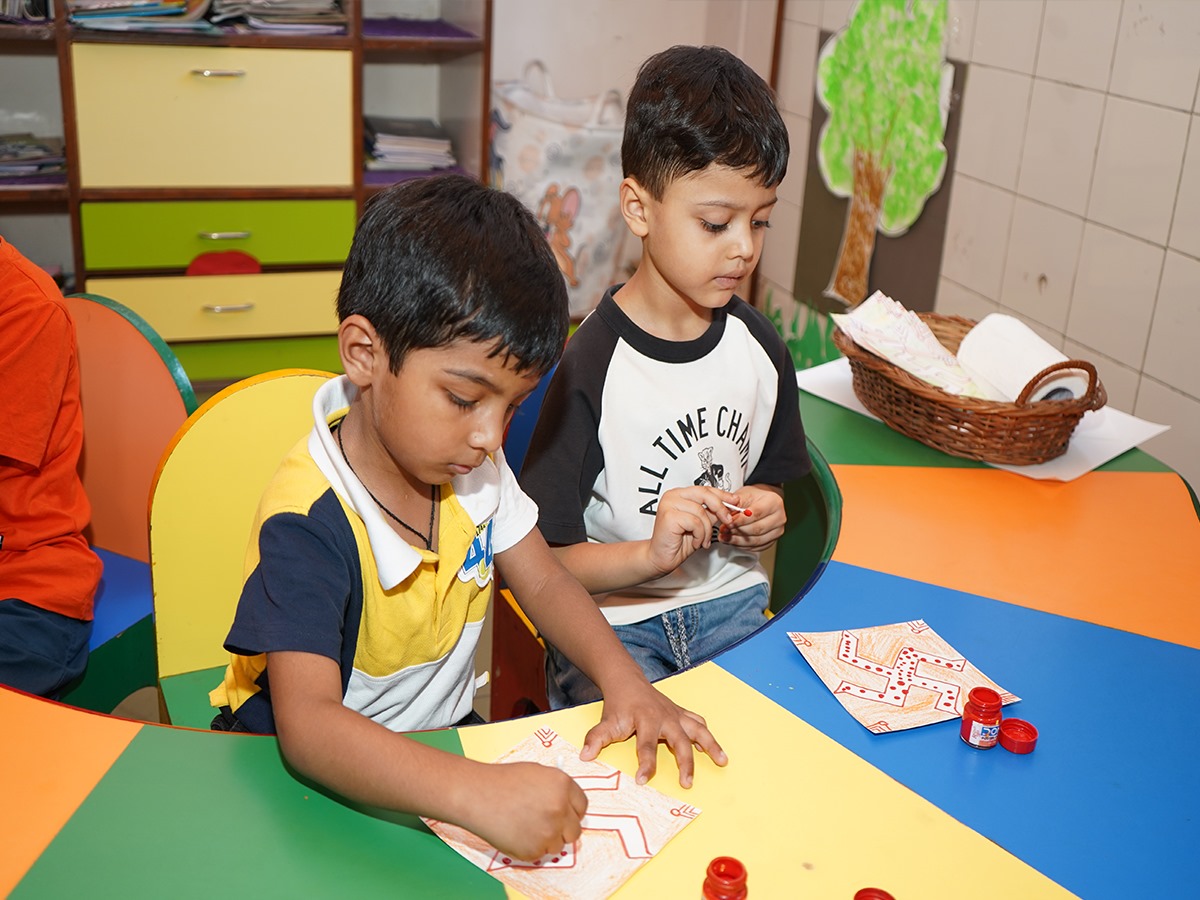
- Clay modelling
- Painting
- Collage work
- Water play
- Colour mixing
- Craft materials
Children create freely without fear of “right” or “wrong.” This boosts confidence and originality.
3.4 Problem-Solving Builds Creative Intelligence
Montessori materials are designed to be self-correcting.
At Tinkerbelle, children understand mistakes by:
- Trying again
- Reworking patterns
- Rearranging puzzles
- Rebuilding structures
This trial-and-error approach strengthens creativity, innovation, and resilience.
4. How Montessori Learning Builds Independence at Tinkerbelle
Independence is one of the hallmark outcomes of Montessori education. Tinkerbelle places great emphasis on helping children handle day-to-day tasks confidently.
4.1 Practical Life Activities Develop Essential Skills
Children participate in:
- Pouring water
- Buttoning and zipping
- Tying laces
- Cleaning spills
- Setting tables
- Organizing shelves
- Watering plants
These activities build confidence, responsibility, and coordination.
4.2 Self-Directed Learning Builds Decision-Making Skills
Instead of forcing every child to follow the same task:
- Children choose activities based on interest
- They complete tasks at their own pace
- They learn to manage their own time
This is a crucial skill that builds independence and ownership.
4.3 Movement-Based Learning Encourages Self-Control
In Montessori, children move freely within the classroom.
Tinkerbelle allows:
- Flexible seating
- Movement exploration
- Outdoor learning
- Montessori work cycles
Controlled movement helps children learn self-regulation and discipline.
4.4 Respect and Responsibility Are Core Values
Children at Tinkerbelle learn to:
- Respect materials
- Clean up after tasks
- Wait their turn
- Help younger peers
- Follow routines independently
These habits form the foundation of responsible adulthood.
5. Emotional and Social Growth Through Montessori Principles
Montessori is not just academic—it builds the emotional and social grounding children need.
5.1 Calm and Supportive Environment Reduces Anxiety
Tinkerbelle classrooms promote:
- Peaceful communication
- Patience
- Soft tones
- Predictable routines
- Emotional guidance
This helps children feel safe, understood, and respected.
5.2 Collaboration and Community Learning
Children:
- Work together
- Share materials
- Help each other
- Learn empathy and kindness
This builds social confidence and emotional maturity.
5.3 Celebrating Unique Strengths Builds Self-Worth
Montessori rejects comparison.
Tinkerbelle celebrates:
- Every child’s pace
- Each child’s interests
- Individual progress
- Special talents
This instills confidence and self-love from an early age.
6. Academic Growth Through Montessori at Tinkerbelle
While creativity and independence are core outcomes, Montessori learning also builds a strong academic foundation.
6.1 Early Literacy Through Hands-On Learning
Children learn language by:
- Tracing sandpaper letters
- Building words with movable alphabets
- Forming phonetic sounds
- Matching pictures and words
This multi-sensory learning ensures natural and strong reading skills.
6.2 Strong Mathematical Understanding
Montessori math materials help children see and feel numbers.
At Tinkerbelle, children understand:
- Counting
- Decimal system
- Addition and subtraction
- Quantities
- Patterns
Math becomes enjoyable, logical, and meaningful.
6.3 Scientific Exploration
Science activities include:
- Nature walks
- Plant observation
- Basic experiments
- Life cycle studies
Children learn to question, observe, and discover—with curiosity leading the way.
6.4 Cultural and Physical Education
Tinkerbelle integrates:
- Music
- Dance
- Yoga
- Festivals
- Geography
- Storytelling
This enriches cultural understanding, physical health, and classroom joy.
7. Why Tinkerbelle Is the Best Montessori School in Panchkula
Parents consider Tinkerbelle the Best Montessori School in Panchkula because of its:
✔ Montessori-trained educators
✔ Scientifically designed environment
✔ Child-led, hands-on learning
✔ Balance of academics and creativity
✔ Focus on independence and responsibility
✔ Individual attention and emotional support
✔ Safe, hygienic, and nurturing atmosphere
✔ Strong communication with parents
✔ Modern facilities inspired by global Montessori standards
Tinkerbelle is not just a school—it’s a space where children blossom naturally and joyfully.
8. The Long-Term Benefits of Montessori Learning at Tinkerbelle
Children who learn in a Montessori-inspired environment tend to develop:
- Deep concentration
- Strong creativity
- Natural curiosity
- High confidence
- Independence
- Emotional resilience
- Problem-solving mindset
- Social maturity
- Strong academic skills
- A lifelong love for learning
These are the qualities that prepare children for future success.
9. How Parents Play a Role in the Montessori Journey
Tinkerbelle believes in strong home–school partnerships.
Parents are guided to:
- Encourage independence at home
- Provide simple choices
- Avoid comparing children
- Use positive communication
- Participate in school activities
This harmony between home and school makes the Montessori experience complete.
10. Conclusion: Montessori Learning at Tinkerbelle Shapes Future-Ready Children
Tinkerbelle’s Montessori-inspired education is designed to nurture curious minds and confident individuals. By blending structured environments, purposeful materials, emotional support, and creative exploration, Tinkerbelle has earned its place as the Best Montessori School in Panchkula.
Here, children don’t just learn—they grow, discover, imagine, and become independent thinkers ready for the world ahead.
If you’re looking for a school that prioritizes your child’s holistic development, values creativity, and builds independence from the earliest years, Tinkerbelle is the perfect choice.