
Early childhood is a magical stage filled with curiosity, creativity, and imagination. At this age, children learn best through play and exploration. As a parent, you can turn ordinary moments into extraordinary learning experiences by making education fun and engaging at home.
If you’ve ever wondered how to keep your preschooler entertained while also helping them learn, you’re not alone. Parents everywhere are looking for creative ways to blend play with learning. This guide, inspired by Tinkerbelle — one of the best preschools in Panchkula, will show you how to make learning a joyful and memorable experience for your little one.
Why Fun Learning Matters for Preschoolers
Preschool years are when children’s brains grow rapidly. During this period, playful learning activities help them develop essential cognitive, emotional, and physical skills. According to educators at Tinkerbelle in Panchkula, fun-based learning encourages curiosity and creativity, enhances communication and vocabulary, builds confidence and independence, improves motor coordination skills, and strengthens problem-solving and critical thinking abilities. Learning should never feel like a chore. The more your child enjoys an activity, the more effectively they absorb new information.
Art and Craft Adventures at Home
Let your preschooler explore colors using their hands. Give them some washable paints and a large sheet of paper. Encourage them to mix colors and create patterns or simple images like trees or flowers. This improves motor skills, color recognition, and creativity.
Use paper plates, glue, and craft materials to make animal faces. Create lions, cats, or bunnies together. Add buttons for eyes, yarn for tails, or cotton for fur. Talk about what each animal eats and where it lives. This enhances sensory learning and creativity.
Cut out letters from old magazines and paste them on cardboard in alphabetical order. Encourage your child to say the letter names aloud and match them with familiar words — A for Apple, B for Ball, and so on. This builds letter recognition and vocabulary.
Sensory Play for Hands-on Learning
Sensory play stimulates your child’s senses — touch, smell, sight, and hearing — helping them understand the world better. At Tinkerbelle Panchkula, sensory activities are part of everyday learning, and you can easily try them at home too. Fill a tray or box with rice or sand and hide small toys inside. Give your child a spoon or cup to dig and discover hidden treasures. This enhances observation, patience, and hand-eye coordination.
Fill a small tub with water and floating toys. Teach your preschooler which objects sink and which float. Add cups and spoons for pouring and scooping. This develops scientific curiosity and fine motor control.
Make homemade play dough using flour, salt, and water. Let your child roll, press, and mold shapes, animals, or alphabets. This builds creativity and strengthens hand muscles.
Reading and Storytelling Magic
Storytime is one of the most effective learning moments for preschoolers. Reading together enhances listening, imagination, and communication. Choose colorful books with simple text and big illustrations. Point to pictures and ask your child questions about them. This improves vocabulary and comprehension.
Start a story and let your child continue it. For example, “Once upon a time, there was a tiny bear who wanted to fly…” Let them take the story wherever their imagination leads. This encourages creativity and storytelling skills.
Make simple paper or sock puppets to act out stories. Your child can create voices for each character. This builds confidence and expressive communication.
Music and Movement Activities
Music and movement help preschoolers develop rhythm, coordination, and listening skills. Play nursery rhymes or kids’ songs and dance together. Songs like “If You’re Happy and You Know It” or “Head, Shoulders, Knees, and Toes” make learning body parts and actions fun. This improves balance and memory.
Create shakers with rice in plastic bottles or drums with empty boxes. Let your child experiment with sounds and rhythms. This teaches sound patterns and musical awareness.
Play music and let your child dance freely. When the music stops, they must freeze in their position. This enhances listening and coordination.
Learning Numbers Through Play
Early math skills can be introduced easily at home through fun, everyday activities. Ask your child to count objects around the house such as spoons, shoes, or apples. This builds counting and number recognition.
Draw a hopscotch grid and call out numbers for your child to jump on. This combines physical activity with number learning.
Use snacks like biscuits or fruits for simple math lessons such as counting, grouping, or dividing them. This introduces basic arithmetic concepts.
Mini Science Experiments
Science experiments encourage curiosity and hands-on discovery. You can introduce simple experiments safely at home. Layer colored water mixed with sugar to make a rainbow in a glass. Talk about how some colors sink while others float. This builds early science and observation skills.
Freeze small toys in ice cubes and let your child experiment with ways to melt them faster using warm water or salt. This teaches cause and effect.
Plant beans or small seeds in a pot and observe their growth each day. Explain the importance of sunlight and water. This encourages responsibility and environmental awareness.
Indoor Physical Activities
When outdoor play isn’t possible, bring the fun indoors. Use pillows, chairs, and boxes to create a safe indoor obstacle path. Ask your child to crawl under, jump over, and walk around obstacles. This builds strength and coordination.
Toss a balloon back and forth and challenge your child not to let it touch the ground. This improves balance and focus.
Pretend to move like different animals — hop like a frog, waddle like a duck, crawl like a cat. This promotes physical fitness and creativity.
Everyday Life Learning
Children learn best when they feel involved in real-world activities. Everyday tasks can become learning opportunities. Allow your child to participate in simple cooking activities such as washing vegetables or mixing batter. Talk about colors, textures, and tastes. This builds sensory and practical skills.
Turn laundry sorting into a color or size recognition activity. This encourages organization and responsibility.
Ask your child to identify items by color or shape while unpacking groceries. This strengthens vocabulary and cognitive thinking.
Language and Communication Games
Hide word cards around the house. When your child finds one, they must read or say the word aloud. This builds vocabulary and reading confidence.
Say a word and ask your child to come up with rhyming words. You can make it into a singing challenge. This improves phonetic awareness.
Play sounds like a bell, clap, or horn and ask your child to guess the source. This enhances auditory learning and focus.
Cultural and Seasonal Learning Activities
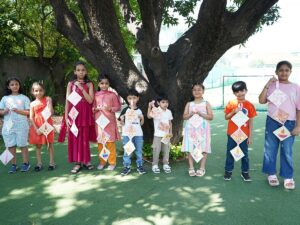
At Tinkerbelle in Panchkula, children learn about traditions, seasons, and celebrations — and you can do the same at home. Celebrate festivals by creating themed crafts such as paper lanterns for Diwali, snowflakes for Christmas, or flags for Independence Day. This teaches values and cultural awareness.
Create a daily weather board using drawings or stickers. Ask your child to observe and describe the weather each morning. This builds observation and expression skills.
During birthday celebrations, ask your child to help count candles, write names, or decorate cards. This combines math, art, and writing in one fun task.
Screen-Free Learning Ideas
Not all learning requires screens. Build a fort using cushions and blankets for storytelling time. Organize a pretend picnic in the living room. Create an art gallery wall with your child’s artwork. Encourage pretend play such as teacher, doctor, chef, or astronaut. These activities boost imagination, problem-solving, and emotional development.
Tips for Parents to Make Learning Fun
Create a routine because consistent schedules help preschoolers focus and feel secure. Follow your child’s interests by choosing activities that align with what they love such as animals, music, or art. Praise effort, not just results, because encouragement motivates children to keep trying. Keep sessions short since preschoolers have short attention spans, so 15 to 20 minutes per activity is ideal. Be patient and playful, allowing your child to learn at their own pace and enjoy the process. Remember, your involvement is the key. Children thrive when learning feels like play and when parents actively participate.
How Tinkerbelle in Panchkula Inspires Learning Through Play
Tinkerbelle, one of the most trusted and well-loved preschools in Panchkula, has perfected the art of fun learning. Their teaching philosophy revolves around hands-on experiences, creativity, and emotional development. Their approach includes interactive storytelling and dramatics, art, craft, and music sessions for holistic learning, Montessori-inspired practical lessons, small class sizes for personalized attention, and safe environments that encourage exploration. At Tinkerbelle, children learn not just academic concepts but also social skills, emotional intelligence, and self-expression, setting a solid foundation for their future education.
Final Thoughts: Turning Home into a Learning Playground
Every home can become a preschool of imagination and learning. Whether it’s painting, dancing, storytelling, or experimenting, every playful moment builds your child’s understanding of the world. When parents combine creativity, patience, and enthusiasm, learning becomes effortless and enjoyable. Activities that mix fun and education not only improve academic readiness but also strengthen your child’s confidence, independence, and love for discovery. And when this home learning experience is supported by professional early education, like that offered by Tinkerbelle in Panchkula, your preschooler receives the best start in life.
So, grab those crayons, sing that song, and create magical memories while learning together. Every giggle, every splash of paint, and every story told becomes a step toward building a bright, confident future.