Introduction – The Foundation of a Lifetime
Education is a journey, not a destination. This journey begins long before a child steps into formal classroom learning. The transition from preschool to primary education marks one of the most crucial phases in a child’s development. It is during these early years that children form the cognitive, social, emotional, and behavioural foundations which will support their academic success throughout their lives.
In Panchkula, a city known for its vibrant educational landscape, parents today are more informed and invested in finding the Best Primary School in Panchkula—one that not only offers quality academics but also understands the importance of early learning.
One such school that exemplifies this holistic approach to early education is Tinkerbelle School, Panchkula. In this blog, we’ll explore how early learning shapes academic success, why the preschool to primary transition matters, and how choosing the right Primary School in Panchkula can set children up for long-term achievements.
1. What Is Early Learning?
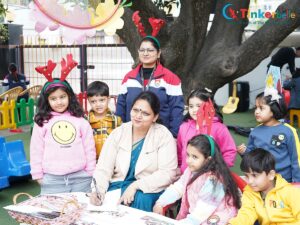
Early learning refers to the educational experiences children receive before they enter formal primary classes—typically from birth to age 6. Research shows that during this period, a child’s brain develops faster than at any other stage in life. The environment, interactions, and experiences during these years play a foundational role in shaping intelligence, emotional resilience, and learning behaviours.
Key areas nurtured during early learning include:
- Language and communication
- Motor skills
- Social and emotional development
- Curiosity and exploration
- Self-regulation and focus
These competencies are vital not just for academics but for life success.
2. Why the Transition from Preschool to Primary Matters
The step from preschool into primary school can be both exciting and challenging for young children. Preschool focuses on play-based learning, curiosity, and exploration. Primary school introduces structured learning, academic routines, and higher cognitive tasks.
If a child enters a Primary School in Panchkula with strong early learning foundations, this transition becomes smoother and more rewarding.
Here’s why this transition is so significant:
a. Cognitive Preparedness
Early learning builds essential cognitive skills such as memory, reasoning, attention, and problem-solving. These abilities allow children to adapt quickly to academic tasks like reading, writing, numeracy and comprehension, which form the core of primary education.
b. Emotional Stability
Starting primary school can feel overwhelming. Children who have developed emotional regulation through early learning can cope better with new routines, social interactions, and performance pressures.
c. Social Adaptability
Preschool provides rich opportunities to interact with peers, follow group rules, share, and resolve conflicts. When children carry these skills into primary classes, they find it easier to collaborate, participate confidently, and build positive relationships.
d. Attitude Toward Learning
Perhaps most importantly, early learning shapes a child’s attitude toward school. Children who associate learning with joy, curiosity, and achievement are more likely to stay motivated, engaged, and resilient—even when academics get challenging.
3. What Makes the Best Primary School in Panchkula?
With many Primary Schools in Panchkula, parents often ask: “What should I look for when choosing the best environment for my child?”
Here are qualities that distinguish top primary schools:
a. Child-Centric Learning Environment
The best primary schools understand that each child is unique. They design learning experiences that are inclusive, adaptive, and supportive of diverse learning styles.
b. Continuity from Preschool to Primary
Schools that offer both early learning programs and primary classes ensure continuity. They support smooth transitions and build on previous learning rather than starting from scratch.
c. Skilled & Caring Educators
Teachers in top primary schools are trained not just in academics but also in child psychology, differentiated instruction, and positive reinforcement methods that encourage confidence and curiosity.
d. Balanced Curriculum
While academics are crucial, the best schools balance them with life skills, creativity, physical education, moral values, and modern competencies like digital literacy.
e. Safe & Nurturing Environment
Safety, hygiene, structured routines, and warm teacher-student relationships create a secure learning atmosphere where children feel confident to explore and grow.
4. Tinkerbelle School Panchkula — A Model of Early & Primary Education
In the context of Primary Schools in Panchkula, Tinkerbelle School stands out for its philosophy rooted in whole-child development.
Here’s why Tinkerbelle School is often recognized as one of the Best Primary Schools in Panchkula:
a. A Strong Foundation in Early Learning
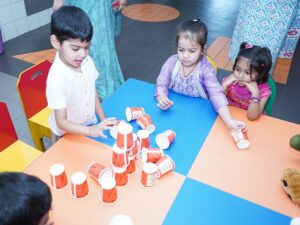
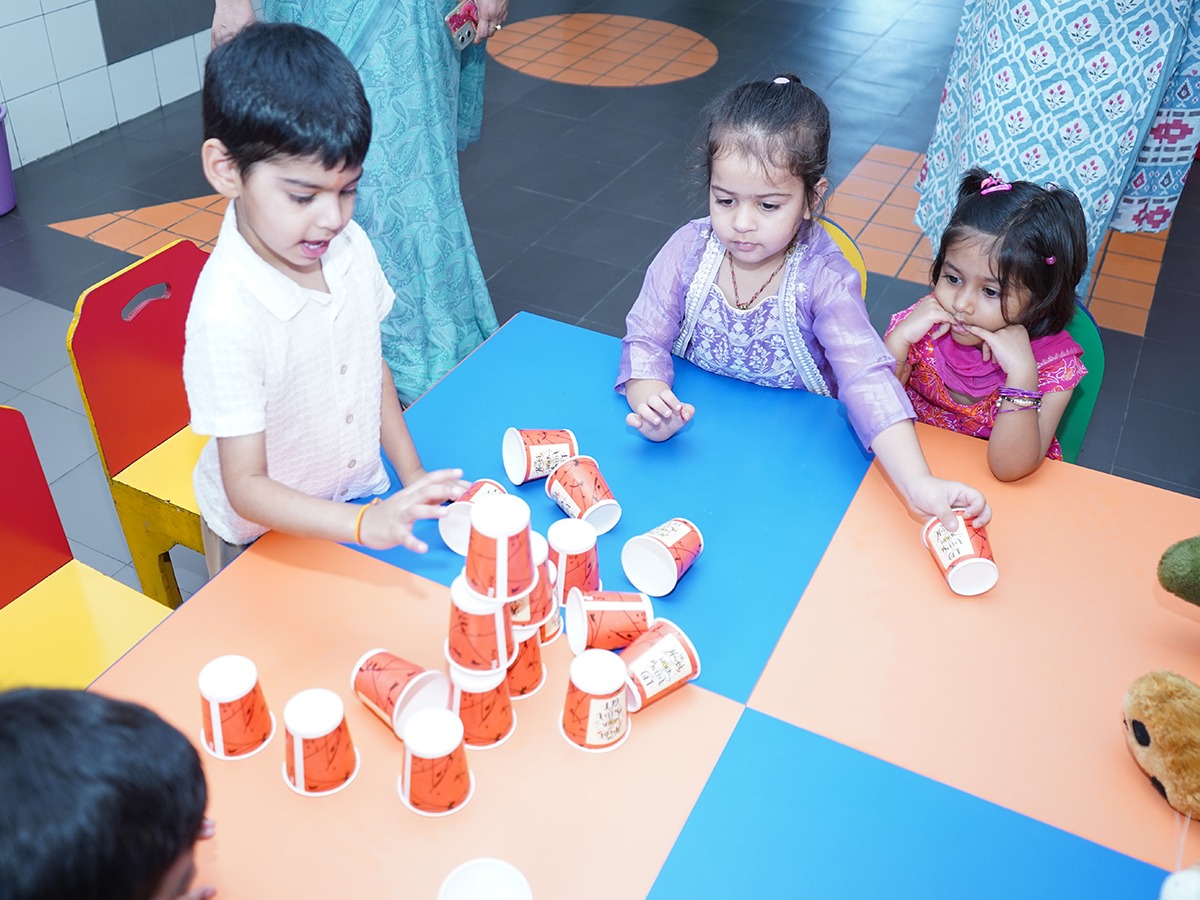
Tinkerbelle School emphasises the importance of foundational skills established in preschool. Its early learning curriculum is rich in play-based activities, experiential learning, language development, and social interaction tasks.
Children are encouraged to:
- Explore through play
- Develop curiosity and questioning habits
- Express creativity and communication skills
This prepares them cognitively and emotionally for the academic demands of primary school.
b. Seamless Progression to Primary Classes
Unlike many schools where preschool and primary are separate systems, Tinkerbelle creates curriculum bridges that make the transition natural and well–supported. Teachers closely monitor learning progress so that primary grade instruction builds on existing strengths.
For example:
- Early literacy activities evolve into formal reading groups.
- Number sense developed through play is extended into mathematical reasoning.
- Social skills from preschool become collaborative learning in primary grades.
This continuity is a hallmark of quality education.
c. Engaging and Relevant Curriculum
Tinkerbelle’s primary curriculum blends essential academic competency with critical thinking and real-world application. Core subjects like English, Mathematics, Environmental Studies, and Languages are taught in ways that engage students actively rather than through rote memorisation.
- Conceptual learning
- Hands-on activities
- Project-based tasks
- Integration of art, music, and physical education
All these make learning meaningful and motivating for young learners.
d. Focus on Life Skills and Values
Academic knowledge alone does not guarantee success. Tinkerbelle integrates character education, communication skills, teamwork, leadership and empathy into daily routines. These life skills help students become confident, responsible, and adaptable—traits that are crucial in today’s world.
e. Teacher Quality and Professional Development
Teachers at Tinkerbelle are trained in contemporary pedagogy, early childhood development, classroom management, and child assessments. They use:
- Positive reinforcement techniques
- Differentiated instruction strategies
- Regular feedback systems for students and parents
The teacher-student bond becomes a source of encouragement and growth rather than pressure.
f. Parent-School Partnership
Understanding that education is a shared responsibility, Tinkerbelle actively involves families in the learning process. Regular parent conferences, workshops, and progress updates help bridge school and home environments. This level of involvement boosts student confidence and academic consistency.
5. How Early Learning Shapes Academic Success — Key Insights
Let’s take a deeper look at how early learning impacts long-term academic success:
i. Language Skills and Literacy
Language skills are among the first academic predictors of success. Children who develop strong listening, speaking, vocabulary, and early reading skills are better prepared for the literacy demands of primary grades.
Early learning enriches:
- Vocabulary development
- Story understanding
- Language comprehension
- Expression and communication
This leads to confident reading and writing in primary school, giving children a powerful advantage.
ii. Numeracy and Logical Thinking
Before formal maths instruction, children explore patterns, sorting, counting, measurement, and spatial reasoning through play. These foundational skills make learning arithmetic, geometry, and problem-solving easier later.
Children from quality early learning programs enter primary school with:
- Higher number sense
- Better logical reasoning
- Improved problem-solving skills
iii. Social & Emotional Skills
Emotional regulation, cooperation, conflict resolution, sharing, empathy—all of these are cultivated during early learning. These skills ensure children are:
- Comfortable in group settings
- Able to work collaboratively
- Confident in expressing needs and ideas
This emotional stability fosters better focus and learning in primary school classrooms.
iv. Growth Mindset & Curiosity
Children who are encouraged to explore, question, and experiment develop a “growth mindset”—a belief that learning is exciting and mistakes are part of the process. This mindset carries through primary school and supports resilience in the face of academic challenges.
v. Structured Routine and Kindergarten Preparedness
Preschool introduces children to basic routines—follow instructions, sit for group activities, transition between tasks, listen to teachers, and manage personal belongings. When children arrive at primary school familiar with these expectations, they adjust more quickly and confidently.
6. Practical Tips for Parents Navigating the Preschool-to-Primary Transition
As a parent, you play a vital role in ensuring your child thrives academically. Here are practical strategies to support your child’s transition:
a. Visit and Explore Primary Schools Early
Plan school tours well before admissions begin. Look for:
- Curriculum philosophy
- Class sizes
- Teacher engagement methods
- Safety and infrastructure
- Parent support systems
For parents in Panchkula, evaluating institutions like Tinkerbelle School gives clarity on how schools nurture early learning progression.
b. Observe Your Child’s Readiness
Children develop at individual paces. Look for signs like:
- Ability to follow simple instructions
- Interest in books and storytelling
- Curiosity about numbers and patterns
- Basic social interaction with peers
These are signals your child is ready for structured learning.
c. Maintain Meaningful Routines at Home
A predictable routine aids adjustment. Simple habits like reading together, discussing daily experiences, outdoor play, and creative activities build readiness for primary school expectations.
d. Communicate with Teachers Often
Strong parent-teacher communication ensures consistency across home and school. Share observations, concerns, and achievements with teachers to tailor learning support.
e. Encourage Independence
Primary learning demands more independence. Small tasks like organizing backpacks, dressing, and managing lunch help cultivate confidence and self-help skills.
7. How Panchkula’s Educational Ecosystem Supports Early Learning
Panchkula has grown into one of the region’s most educationally vibrant cities. With a mix of traditional and innovative Primary Schools in Panchkula, the focus is shifting toward holistic learning rather than just academic performance.
Parents now prioritise:
- Child-centric learning
- Balanced development
- Emotional wellbeing
- 21st century competencies
In this context, Tinkerbelle School’s philosophy of nurturing the whole child aligns with modern educational expectations and distinguishes it as one of the Best Primary Schools in Panchkula.
8. Long-Term Benefits of Strong Early Foundations
The impact of quality early learning lasts far beyond the primary years. Children who start strong are more likely to:
- Excel in secondary and higher education
- Display leadership and communication skills
- Pursue lifelong learning
- Adapt to future challenges confidently
- Maintain emotional health and resilience
Parents who invest in early learning and choose supportive primary environments like Tinkerbelle often see a marked difference in their child’s academic trajectory and self-esteem.
Conclusion – Making Informed Choices for Lifelong Success
The transition from preschool to primary marks a new chapter in every child’s life—one filled with exploration, growth, and learning. This journey becomes transformative when guided by strong early learning experiences and supported by schools that understand the science of child development.
For families in Panchkula seeking the Best Primary School in Panchkula, prioritising continuity from early learning through primary education makes all the difference. When children enter primary school with confidence, curiosity, and core foundational skills, they unlock not only academic success but also the joy of discovery that lasts a lifetime.
Tinkerbelle School Panchkula represents one such educational environment—where early learning and primary education blend seamlessly to shape bright, resilient learners.
If you are a parent seeking more than just academic scores—if you want an education that builds character, creativity, and lifelong love for learning—then the journey from preschool to primary begins with choosing the right partner.
Because strong beginnings lead to successful journeys.